
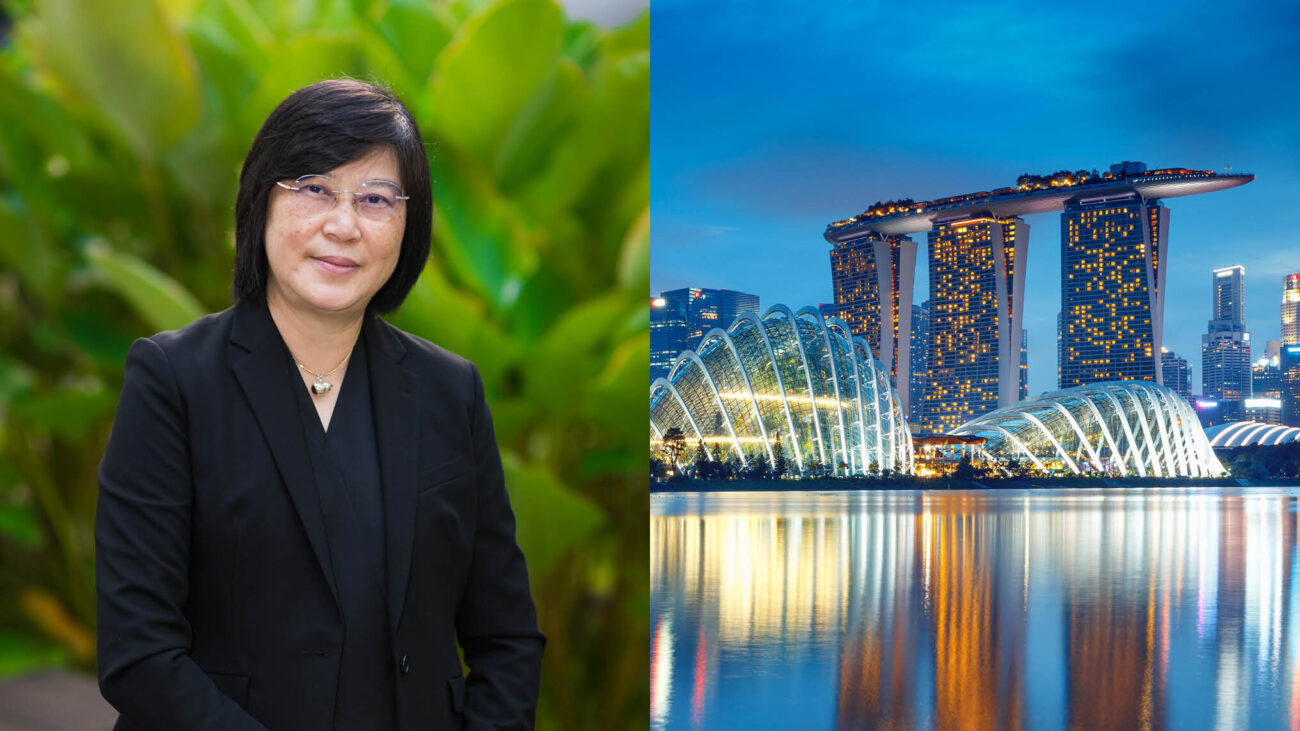
Shirley Lim, General Manager at Messe Düsseldorf Asia. Foto: Messe Düsseldorf, Adobe Stock
AI infrastructure worth billions, national strategies from Singapore to Vietnam, and a young, mobile-first consumer base: Southeast Asia is moving fast – but with a new sense of discipline. Shirley Lim, General Manager at Messe Düsseldorf Asia, explains why the region's innovation culture is less about disruption and more about solving real problems at scale.
What's shaping the technology landscape across Southeast Asia right now?
Artificial intelligence is leading the way, especially in more advanced applications, alongside smarter supply chains, edge computing, and secure data sharing. What is particularly notable is the strong policy support behind this, with governments across the region actively pushing digital adoption through national strategies and innovation programs. Initiatives like Singapore’s Smart Nation Initiative, Malaysia’s National Industrial Master Plan, and Thailand’s Industry 4.0 strategy are all geared towards accelerating the adoption of advanced technologies as a way to strengthen competitiveness.
How much momentum is coming from the private sector?
A lot. Major global tech players such as Google, Microsoft, and Amazon Web Services are investing heavily in AI infrastructure across the region, reflecting Southeast Asia’s growing importance as a high-potential market. The region could capture $1 trillion in AI-driven economic value by 2030. Beyond AI, fintech and health tech continue to gain ground, particularly in financial inclusion, telemedicine, and AI-driven diagnostics. If you step back, the bigger picture is clear: Southeast Asia is not just adopting technology, it is becoming a serious proving ground for how these innovations are applied at scale.
Let's turn to the people behind the innovation. How would you describe the entrepreneurial mindset across Southeast Asia right now?
There is a much more grounded mindset in the market today. Companies are still ambitious, but there is now a stronger focus on building sustainable businesses, not just chasing growth. Investors and partners want to see clear thinking around profitability, customer value, and long-term viability.
What does that look like in practice?
Innovation in Southeast Asia tends to be very practical. Rather than trying to change behavior completely, many companies focus on making everyday habits easier, faster, or more accessible, whether that is in how people shop, pay, borrow, or access services. That is why sectors like e-commerce and fintech continue to provide such a strong base for new ideas.
How does the market itself shape that mindset?
Significantly. Southeast Asia offers major consumer-driven digital opportunities, fueled by rapid adoption and youthful demographics. At the same time, it is a highly mobile-first and fast-moving market where consumers are quick to switch if a product does not deliver. That, in turn, has fostered an entrepreneurial culture that is both ambitious and highly pragmatic, one that values speed, adaptability, and strong execution. Ultimately, innovation in Southeast Asia is less about disruption for its own sake, and more about solving real problems in ways that can scale and deliver clear results.
What initiatives or conditions are in place to foster innovation and attract innovation-driven companies?
Southeast Asia is becoming an increasingly attractive base for innovation-driven companies because the momentum is being shaped by both policy and market demand. Across the region, governments are putting real structures in place, from investment incentives and startup programs to innovation centers, digital frameworks, and stronger regulatory support. At the same time, a young and digitally connected population is creating the kind of openness and demand that allows new ideas to be tested, adopted, and scaled quickly.
Can you give some concrete examples?
Programs such as Thailand’s BOI Investment Promotion and Vietnam’s National Innovation Center are helping to drive this by providing funding, mentorship, and ecosystem support. Indonesia’s 1,000 Digital Startups Program, Thailand’s National Innovation Agency-led Start-up Thailand, and Vietnam’s dedicated national startup initiatives all reflect a wider commitment to building stronger innovation ecosystems through financing, business support, stakeholder networks, and updated regulatory frameworks.
How does Messe Düsseldorf contribute in this region?
In Southeast Asia, platforms such as Medical Fair Asia, Medical Manufacturing Asia, Pack Print International, wire and Tube Southeast Asia, GIFA and METEC - Southeast Asia and the Indonesia editions, as well as ProWine Singapore, and the plastic series of exhibitions in Indonesia, Thailand, and Vietnam - give companies direct access to new technologies, market insight, industry benchmarks, and potential partners, all within a highly efficient face-to-face setting. Trade shows are especially relevant in Southeast Asia, where industrial upgrading is moving quickly across multiple sectors. What trade fairs can do, in a way no catalogue or digital platform can fully replicate, is bring the right people, technologies, and ideas together at the right time, and turn observation into action.